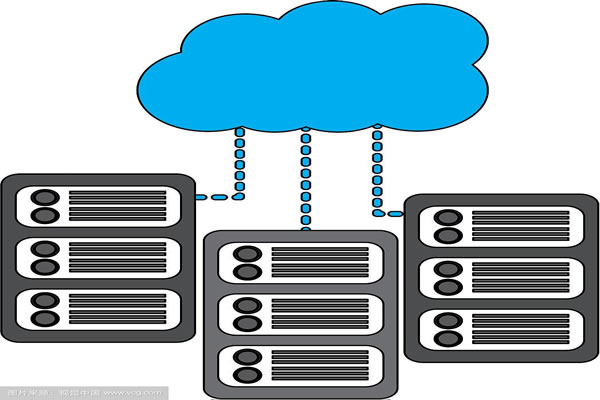
In Cambodia's rapidly developing digital media landscape, choosing the right Cambodian video cloud server to meet low-latency live streaming needs has become a core concern for streaming service providers and content providers. This article systematically reviews selection points from the perspectives of network, architecture, protocols, and operations to help decision-makers find a balance between localized deployment and global coverage.
Understanding the significance of "low-latency live streaming" for the Cambodian market
Low-latency live streaming refers to minimizing the end-to-end latency from the collection end to the viewer as much as possible. In Cambodia, audience distribution and mobile network environments determine sensitivity to latency. When selecting a video cloud server, priority should be given to the strict latency requirements of real-time interactive scenarios (such as remote teaching, online competitions, sports commentary).
Network Location and Node Deployment: The importance of CDNs and edge nodes
Deploying video cloud servers in Cambodia determines the network location and the number of hops for transmission. High-quality CDNs and edge nodes can push content closer to users on the network, reducing cross-border links. Assessing the provider's node coverage, peering relationships, and local operator interconnection is key to reducing routing jitter and latency.
Bandwidth and network link quality: consider not only bandwidth but also stability
Bandwidth size affects concurrency and bitrate, but bandwidth stability, packet loss rate, and jitter are even more critical to the live streaming experience. Choosing cloud services that support multi-link redundancy, QoS optimization, and packet loss retransmission mechanisms helps maintain low latency and smooth viewing during mobile network fluctuations or peak periods.
Encoding and Transport Protocols: Choose a technology stack suitable for low latency
The transmission protocol directly affects latency. WebRTC is suitable for interactive scenarios and offers sub-second latency; Low-latency HLS/LL-HLS strikes a compromise between compatibility and latency with CMAF. When selecting a model, select the appropriate encoder and transmission protocol based on the audience's device, browser support, and business needs.
Server instance specifications and elastic scalability
The server's CPU, memory, network interfaces, and NIC performance determine real-time transcoding and concurrency capabilities. For burst traffic, on-demand elastic scaling and automatic load balancing ensure stable latency. During evaluation, focus on instance startup speed, automatic scaling strategies, and horizontal scaling capabilities.
The impact of storage and I/O performance on low latency
While live streaming mostly relies on memory and networks, recording, time-shifting, and playback functions depend on storage. High-performance local or distributed storage, low-latency writes, and fast reads reduce playback request response times, impacting the overall viewing experience and interaction latency.
SLA and monitoring capabilities: data-driven operations and maintenance assurance
Choose vendors with explicit Service Level Agreements (SLAs) and ensure they provide real-time monitoring, alerting, and link diagnostics. End-to-end metrics for latency, packet loss, jitter, and audience experience should be visualized to quickly pinpoint issues and optimize capacity and networks.
Security and compliance: Data sovereignty and access control
When deploying video cloud servers in Cambodia, it is important to pay attention to local laws and data sovereignty requirements. Encrypted transmission, access control, authentication, and audit logs are fundamental elements. Compliance assessments should be balanced with low-latency requirements to avoid unnecessary delays caused by security measures.
Cost controllability and on-demand elasticity: balancing performance and expenses
Pursuing extremely low latency leads to higher resource consumption and operational complexity. When evaluating solutions, pay-as-you-go billing, resource reserves, bandwidth peak strategies, and optimization methods should be comprehensively considered to ensure cost control and ease of operation and maintenance while meeting business SLAs.
Practical advice: Testing, hybrid deployment, and continuous optimization
During the decision-making process, it is recommended to conduct localization testing and stress testing first. A hybrid deployment strategy can be adopted: deploying edge nodes or localized access in Cambodia, while leveraging regional cloud and global CDNs for disaster recovery and coverage. Optimize configuration through continuous monitoring and data iteration.
Summary and suggestions
How to choose the right Cambodia video cloud server to meet low-latency live streaming needs requires a multi-dimensional evaluation including network nodes, bandwidth quality, transmission protocols, server specifications, storage performance, monitoring, and compliance. It is recommended to first clarify business scenarios and latency targets, conduct localization testing, prioritize edge nodes and real-time protocol support, and continuously optimize combined with visual monitoring to achieve a stable and controllable low-latency live streaming experience in the Cambodian market.
- Latest articles
- Popular tags
-

Why Cambodia Vps Is An Ideal Choice For Overseas Website Building
discover why cambodia vps is an ideal choice for overseas website building and learn about its advantages and features. -
Southeast Asia Cambodia Cloud Server Purchasing Guide And Precautions
this article provides you with a guide and considerations for purchasing cloud servers in southeast asia and cambodia to help you make a wise choice. -

Discussion On The Performance And Advantages Of Tencent Cambodia Cloud Server
discuss the performance and advantages of tencent cambodia cloud server and analyze its characteristics in data processing, reliability and security.